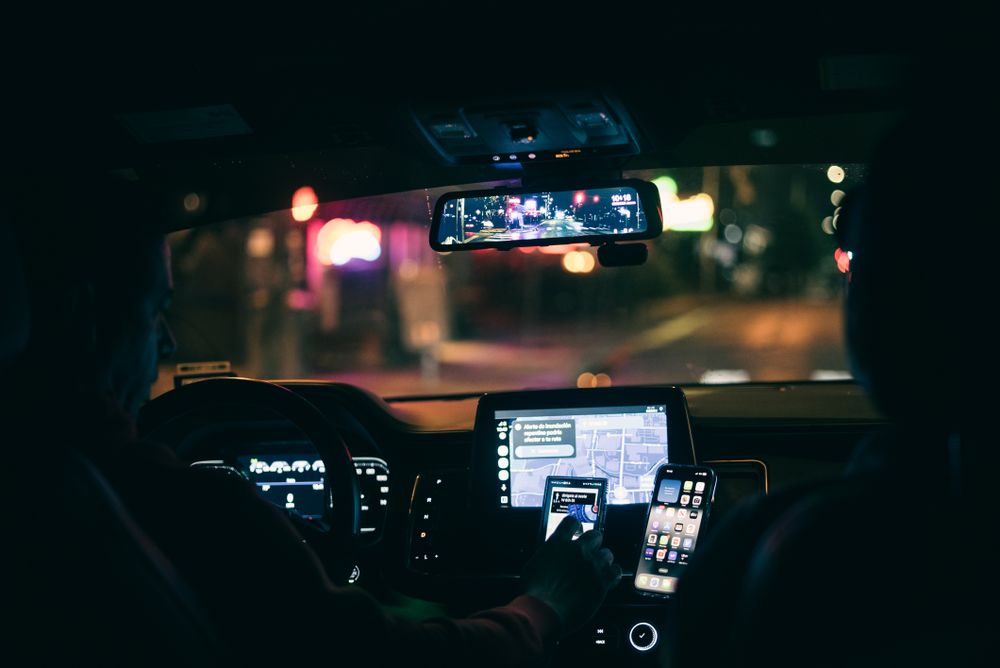
Half of driving happens in the dark — master it
Night driving cuts your visibility, scrambles your depth perception and fills your mirrors with glare. Four evening sessions teach you to read the dark like daylight.
You'll practise headlight technique, glare recovery, unlit rural roads, rainy nights and city-night hazards like cyclists and crossings — all with an instructor beside you.
Book Night SessionsWhat's included
Lights done right
Low vs. high beam, fog lights, and when to dip — the etiquette examiners and drivers notice.
Glare recovery
What to do when oncoming headlights blind you: lane-keeping, speed and eye-line technique.
Dark rural roads
Unlit bends, wildlife risk and passing safely where there are no streetlights to help.
City after dark
Cyclists, pedestrians in dark clothing, crossings and night-time delivery traffic.
Rainy nights
Reflections, spray and doubled stopping distances — the hardest combo, made manageable.
Fatigue awareness
Spotting tiredness early, planning breaks and knowing when not to drive at all.
Four evenings, from dusk to full dark
Each 90-minute session starts at twilight so your eyes adapt gradually — no one is thrown into midnight traffic on night one.
- Twilight start times matched to the season
- City, suburban and rural routes in every course
- Dual-control car with winter-grade headlights
Course questions
Do I need a full license?
You need at least a learner's permit and basic daytime control. Most students join after 5+ daytime lessons or with a full license.
What time are the sessions?
Start times follow sunset — usually 6–9pm in winter, 8–10pm in summer. Weekend night slots are available too.
Is night driving on the test?
Rarely directly — but examiners love asking about lights and glare, and the confidence carries into every drive you take.
Stop avoiding night drives
Four sessions and the dark feels like daytime.
Keep exploring: Defensive Driving · All courses · Pick-up & Drop-off